Research
Wen Li is a Materials Research Society (MRS) Graduate Student Gold Award winner, Benjamin Ball Freud Merit Scholar, fifth-year PhD candidate in Chemistry at the University of Chicago, advised by Prof. Bozhi Tian and Prof. Pedro Lopes. He builds wearable electronic biointerfaces that sense, stimulate, and reshape how the human body feels and heals, bridging electrochemistry, materials science, and human-computer interaction.
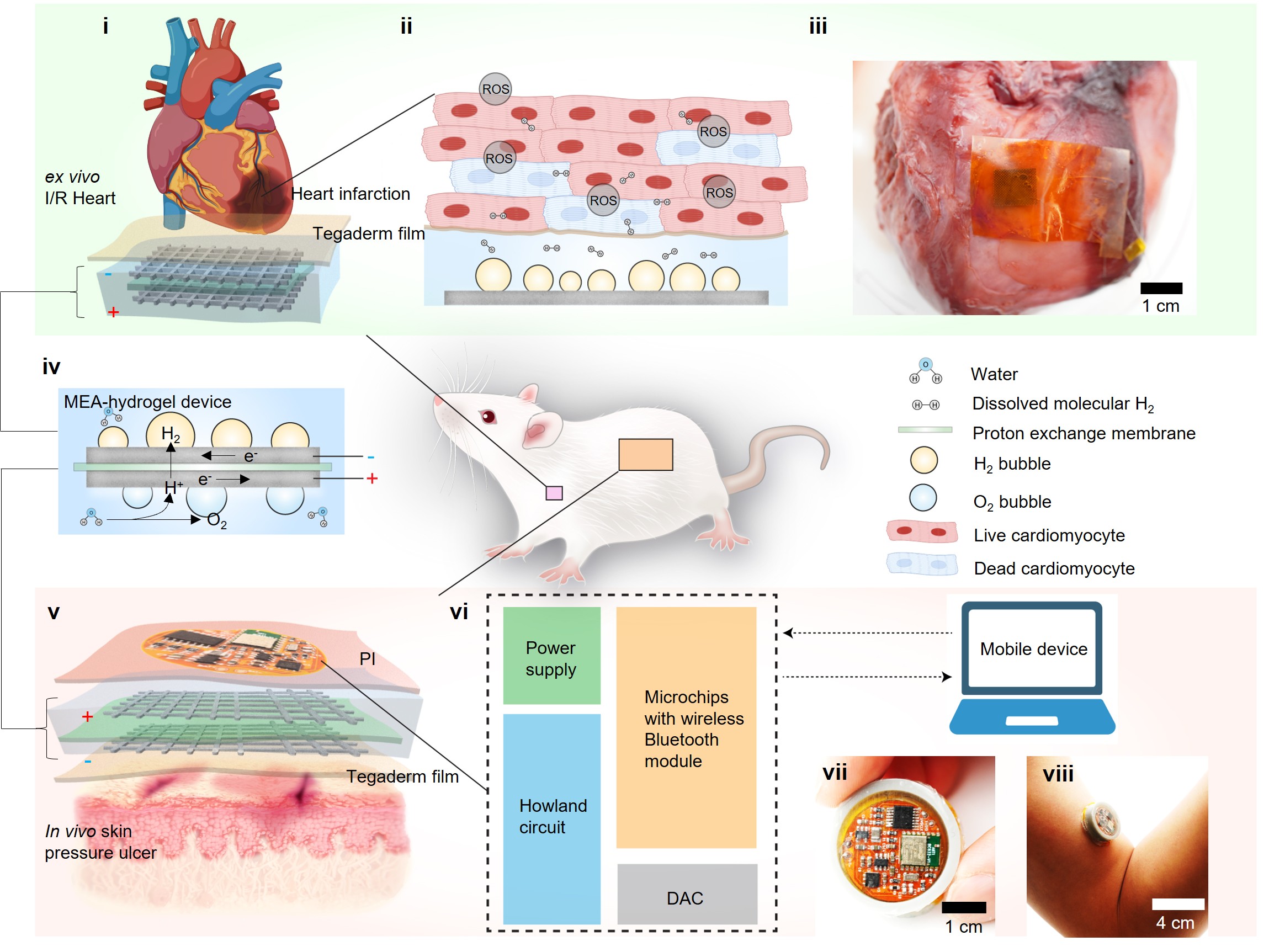
His work spans two complementary directions on electrical biointerface. The first is therapeutic bioelectronics: engineering wearable devices that intervene in human physiology to treat disease. Wen designed an electrochemical hydrogel that generates, stores, and sustainably delivers hydrogen gas directly into wounded tissue, scavenging the reactive oxygen species that drive damage in pressure ulcers (bedsores) and modulating the NF-κB signaling pathway. The device significantly accelerated wound healing in animal models and was published as a first-author paper in Nature Chemical Engineering. Wen then built an integrated electrochemical hydrogen sensor, turning the system into a closed-loop therapeutic platform capable of adapting its dosing to individual wound chemistry in real time.
The second direction is perceptual engineering at the human-computer interface. Here Wen builds wearables that reshape what the body feels. His current project exploits thermal referral — a cross-modal perceptual phenomenon in which thermal sensations at one skin site are felt at a distant site when combined with tactile input — to deliver illusory heat or cold to a target tissue without placing any thermal source on the tissue itself. By pairing a single remote thermal source with electrotactile stimulation of skin mechanoreceptors, the device renders heat and cold sensations on demand. This opens new possibilities for thermal therapy on fragile tissue such as wound sites, for immersive virtual interaction, and as a probe into how the nervous system integrates thermal and tactile information. One of the work is currently under review at a top human-computer interaction conference. He is now investigating the transfer function between electrotactile stimulation and thermal sensation on human arm and preparing the second submission.
His PhD training across electrochemistry, circuit design, in vivo validation, and human psychophysics gives him a rare interdisciplinary foundation for building the next generation of intelligent, adaptive device systems.
Beyond research, Wen co-founded H-Pad with his undergraduate mentee Brennan Lee, winning $5,000 in seed funding from the University of Chicago College New Venture Challenge. His research has been recognized with the MRS Graduate Student Gold Award and Best Poster Award, the 2025 Benjamin Ball Freud Merit Scholarship (UChicago Chemistry). He has contributed to publications in Nature, Nature Nanotechnology, Nature Sustainability, and Matter, with first-author work in Nature Chemical Engineering, CCS Chemistry, and Langmuir.
Outside research, Wen sings bass with UChorus at UChicago — you can hear a recent performance here — and plays piano. He also climbs, cycles around Chicago, and plays Go.
News
December 16, 2025 — Wen received The Olshansky Graduate Student Travel Award from the UChicago Chemistry department.
December 5, 2025 — Wen received both the Material Research Society Graduate Student Gold Award and the Best Poster Award at the 2025 MRS Fall Meeting. It is rare for one student to receive both the Gold Award and Best Poster at the same MRS meeting.
October 24, 2025 — Wen was selected as a Graduate Student Award Finalist for the 2025 MRS Fall Meeting — the only UChicago student to reach this stage in 2025. He competed for the Gold Award on December 2 in Boston, MA.
August 15, 2025 — Wen’s Nature Chemical Engineering paper is now online. As of September 22, 2025, Nature Chemical Engineering had published 25 papers in 2025; Wen’s is one of them.
June 6, 2025 — Wen receives the Benjamin Ball Freud Merit Scholarship from the UChicago Chemistry department.
May 21, 2025 — Wen’s Nature Chemical Engineering paper on Hydrogen Evolution and Dynamics in Hydrogel Electrochemical Cells for Ischemia-Reperfusion Therapy is accepted in principle.
Key Publications
Nature Chemical Engineering 2025
Hydrogen Evolution and Dynamics in Hydrogel Electrochemical Cells for Ischemia-Reperfusion Therapy
Wen Li, Jing Zhang, et al., B Tian
Molecular hydrogen (H₂) protects organs from reactive oxygen species (ROS) damage associated with ischemia-reperfusion (I/R) injury and inflammation. Existing H₂ delivery methods lack precision, targeting the entire body with substantial leakage. We engineered a wireless, portable hydrogel electrochemical cell that enables on-demand H₂ production via the hydrogen evolution reaction (HER), with controllable generation, localized storage, and sustained diffusion to the tissue-device interface. We validated protective effects against ROS in vitro, ex vivo, and in vivo in a skin I/R pressure ulcer model.
Langmuir 2023
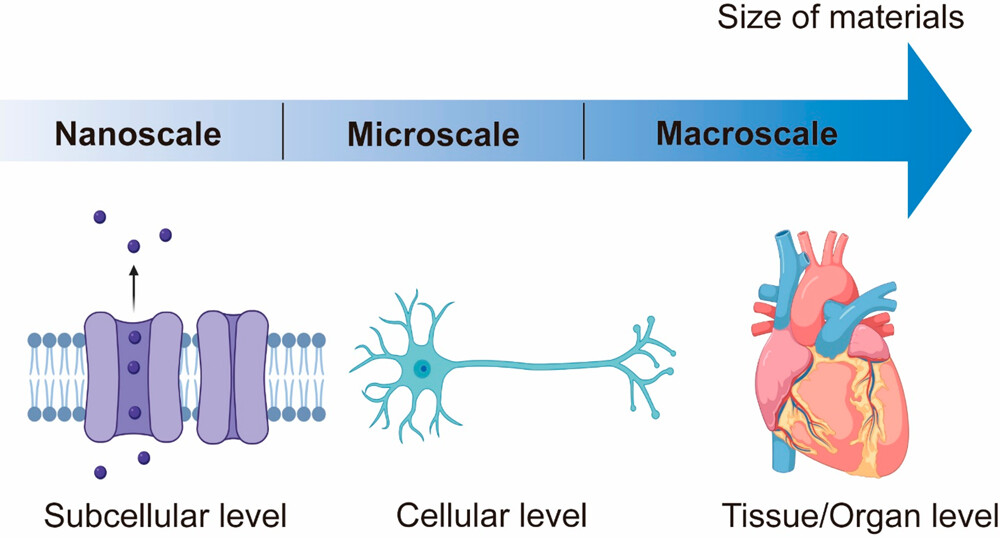
Perspectives on Multiscale Colloid-Based Materials for Biomedical Applications
Wen Li, Judah Huberman-Shlaes, B Tian
Colloid-based materials with tunable biophysical and chemical properties have demonstrated significant potential across a wide range of biomedical applications. We explore synthetic colloid-based materials at the nano- and microscales and their correlation with biological systems, examining their use in spatial imaging, localized drug delivery, and enhanced functionality.
CCS Chemistry 2022
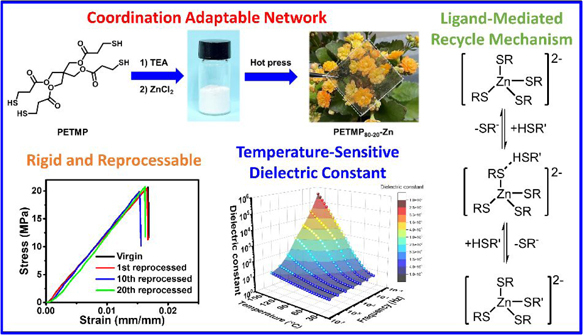
Wen Li, Hong-Qin Wang, Wen-Tong Gao, et al., Cheng-Hui Li
We designed and synthesized a coordination adaptable network (CoAN) by crosslinking low-molecular-weight monomers with coordination bonds. The material shows high mechanical rigidity at ambient conditions yet can be reprocessed rapidly and recycled at mild temperatures with no reduction in mechanical properties — superior performance among covalent adaptable networks reported to date.
Nature Nanotechnology 2025
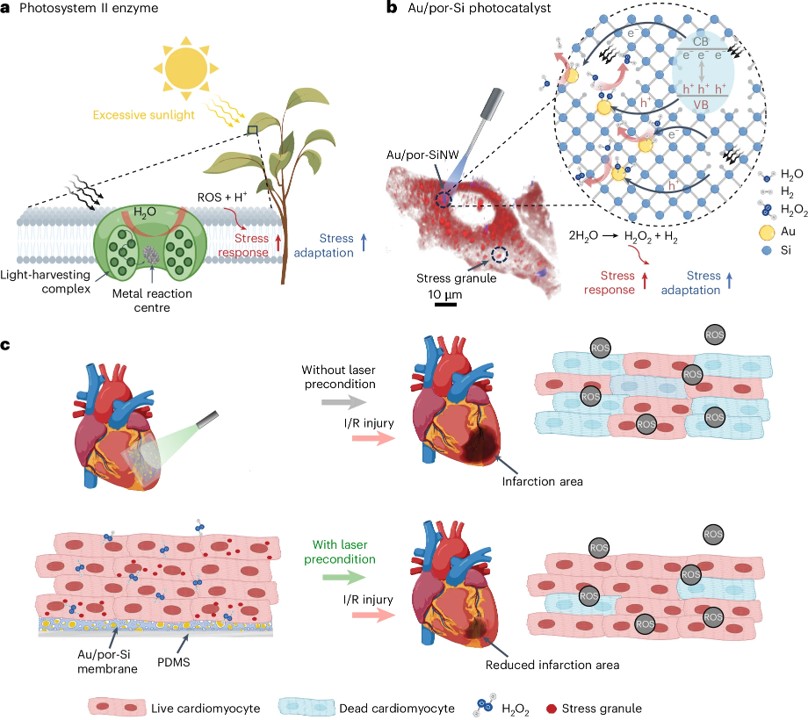
Gold-modified nanoporous silicon for photoelectrochemical regulation of intracellular condensates
Jing Zhang, Pengju Li, Jiping Yue, Lingyuan Meng, Wen Li, et al., Bozhi Tian
We explore the mechanism through which a nanoporous silicon-based photocatalyst facilitates two-electron oxidation of water to generate hydrogen peroxide under physiological conditions. Precise modulation of intracellular stress granule formation via controlled photoelectrochemical H₂O₂ production enhanced cellular resilience to oxidative stress, with efficacy demonstrated in an ex vivo myocardial ischemia-reperfusion model.
Nature 2024
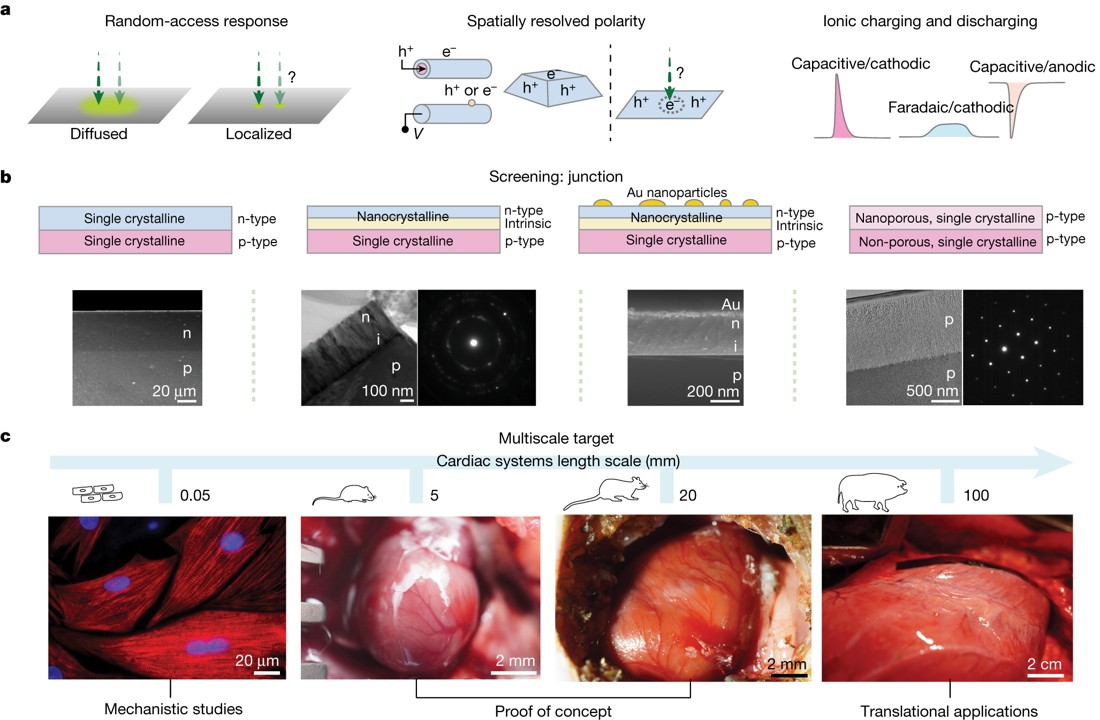
Monolithic silicon for high spatiotemporal translational photostimulation
Pengju Li, Jing Zhang, Hidenori Hayashi, Jiping Yue, Wen Li, et al., Bozhi Tian
We demonstrate tunable spatiotemporal photostimulation of cardiac systems using a non-genetic, semiconductor-enabled biomodulation platform. The leadless silicon-based devices achieve multisite optical pacing of cultured cardiomyocytes, isolated rat hearts, in vivo rat and mouse hearts, and — in the first demonstration of its kind — a pig heart in vivo via a custom endoscopic delivery device.
More papers can be found on Google Scholar.
Academic and Community Service
Peer Review — Since May 2024, Wen serves as a peer reviewer for journals (ACS Nano, Device, npj Biomedical Innovations, IMWUT) and conferences (EuroHaptics).
Entrepreneurship — In 2024, Wen co-founded H-Pad and serves as CTO. He developed a medical device to treat bedsores and demonstrated its effectiveness in preclinical testing. His team was one of 15 out of ~70 to advance to CNVC Phase II, winning $5,000 in seed funding.
Teaching Assistant — From 2021 to 2022, Wen TAed Organic Chemistry, Physical Chemistry Laboratory, and Chemical Kinetics. He developed and delivered weekly recitation sessions, supervised 30+ students in laboratory settings, and held weekly office hours.
Chemistry Student Union — Wen served as team leader of the academic service department in the Chemistry Student Union at Nanjing University. He organized 5+ academic seminars and 2+ exam review sessions, and received the Exceptional Team Leader and Exceptional Freshman Mentor awards.